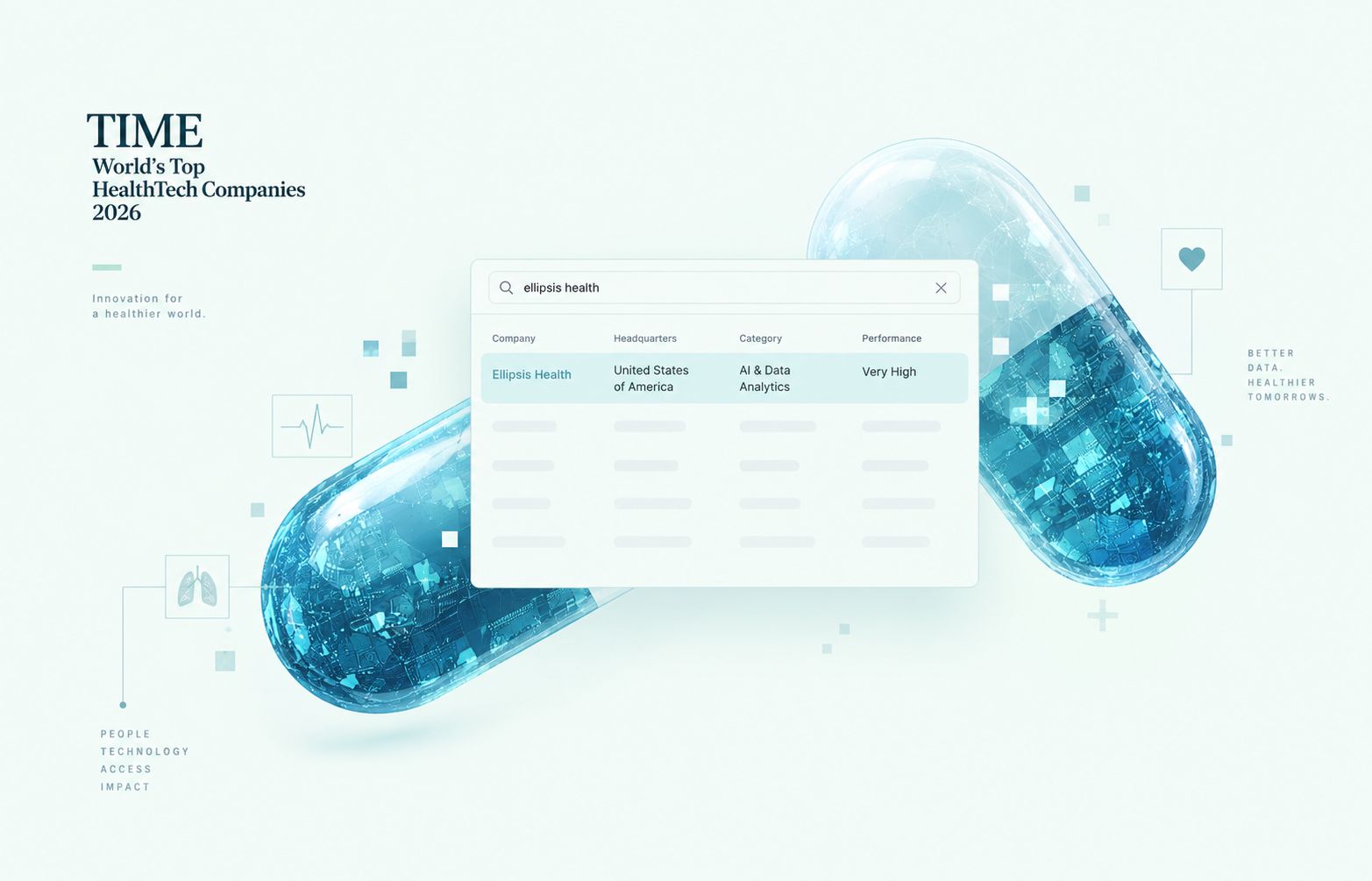
Ellipsis Health, Backed by Khosla Ventures and Salesforce, Makes TIME’s 2026 HealthTech List
Ellipsis Health, a San Francisco-based company founded in 2017, is among 500 companies featured in this year’s ranking.


Most early-stage founders I talk to have the same sales problem. They just don't know it yet.
They build something genuinely useful. They get a meeting. They walk in excited, open their laptop, and spend 45 minutes showing every feature they've spent months building. The prospect nods politely. Says, "looks great, we'll be in touch." And then...nothing.
The founder follows up…Crickets. Eventually, they chalk it up to "bad timing" or "they weren't a good fit."
But most of the time, it’s neither.
Here's the reality: the timing was fine. The fit was fine. You just didn't sell.
B2B buying has fundamentally changed. Buyers are more informed, more skeptical, and more overwhelmed than ever. By the time someone agrees to a meeting with you, they've likely already read your website, maybe watched a demo video, and compared you to two or three alternatives.
What they haven't figured out yet—and what they desperately need help with—is whether their specific problem maps to your specific solution in a way that's worth paying for.
That's the job. That's sales.
And yet most founders skip this entirely. They go straight to "let me show you what we built" without ever understanding:
In many emerging startup ecosystems, especially where technical founders dominate early teams, this is even more common. You built the thing. You love the thing. Naturally, you want to show the thing. But showing is not selling.
There's a concept in enterprise sales called "value selling." The idea is simple: before you ever talk about your product, you establish the value of solving the problem. You quantify the pain. You make the cost of inaction visible.
I spent 20 years doing this at companies like Google and Salesforce, closing over $100M in deals. And I can tell you that the single biggest lever in any B2B sale is not your product. It's whether the buyer feels the urgency of their own problem.
Here's a scenario I've seen play out dozens of times. A founder pitches a workflow automation tool to a Head of Operations. The demo goes smoothly. Features look great. Then the prospect says, "We'll think about it."
What went wrong? The founder never asked: What is this problem actually costing you right now?
If the answer had been "My team spends 20 hours a week on manual reconciliation, which is costing us roughly $15,000 a month in lost productivity", suddenly the conversation changes. Your $500/month tool isn't an expense. It's a 30x return.
But you can't make that case if you never asked.
Early in my career, I was selling a data analytics platform to a mid-size logistics company. I walked in ready to demo. Their team was polite but distracted. Halfway through my pitch, the VP of Operations got up and said, "Sorry, I have to jump on another call. My team can continue."
I stopped the demo. I asked the remaining team: "What's the call about, if you don't mind me asking?"
Turns out they'd just lost a major client because of a delivery reporting failure—something my platform could have prevented. I asked them to walk me through what happened. Twenty minutes later, I wasn't demoing anymore. We were solving. By the end of that conversation, they weren't evaluating a tool. They were asking me how fast we could get them live.
I didn't change my product that day. I changed my approach.
1. Diagnose before you prescribe. Before any demo, spend the first 20-30 minutes asking questions. What's the problem? How long has it existed? What have they tried? What happens if it doesn't get solved? Treat yourself like a doctor. You wouldn't trust a doctor who prescribed medication before asking a single question.
2. Quantify the pain with them, not for them. Don't tell prospects what their problem is worth. Help them calculate it themselves. Ask: "How many hours a week does your team spend on this?" Then: "What's the rough cost per hour for that team?" Let them do the math. Numbers they arrive at themselves are far more compelling than numbers you present.
3. Tailor the demo ruthlessly. If you do show your product, show only what's relevant to the specific problem you just uncovered. Kill your standard demo deck. Build a focused walkthrough of the two or three features that directly solve what they just told you. Nothing else.
4. Sell to the pain, not the feature. Every time you're about to say, "and this feature lets you do X," pause and reframe it: "Earlier you mentioned Y was costing you Z; this is what we built to solve exactly that." Connect every capability to their specific situation.
5. Get explicit about next steps. Vague follow-ups die. "I'll send you a proposal" is not the next step. "Can we schedule a 30-minute call next Thursday where I walk your CTO through the technical integration?" is the next step. Always define who does what by when, and confirm it before you leave the call.
Here's something most salespeople can't offer that you can: genuine conviction.
When I was closing large enterprise deals, the thing that moved the needle more than any technique was authentic belief in what I was selling. Founders have that in abundance. Except they often channel it into features instead of outcomes.
You built this because you believed the problem was real and worth solving. That belief is your most powerful sales asset. Use it to empathize with the buyer's pain, not just to show off your solution.
Your first 50 customers won't buy because of your product roadmap. They'll buy because they trust that you understand their problem better than anyone else, and that you'll do whatever it takes to solve it.
That's not a feature. That's a promise. And promises close deals.
Yousuf Imran is a sales veteran with 20+ years of B2B sales experience and currently a Strategic AI & ISV Account Executive for Google Cloud. He writes often about sales psychology & tactics on his linkedin https://www.linkedin.com/in/yousufimran/
.png)








.jpg)






.jpg)

.png)




















.jpg)
.jpg)


.jpeg)


.jpg)


.jpg)


.jpg)
.jpg)

.jpg)
.jpg)