
Ellipsis Health, Backed by Khosla Ventures and Salesforce, Makes TIME’s 2026 HealthTech List
Ellipsis Health, a San Francisco-based company founded in 2017, is among 500 companies featured in this year’s ranking.


Due diligence is one of the most consequential stages of a fundraising process. It directly influences valuation adjustments, deal timelines, and investor confidence.
Let’s start with financial due diligence (FDD), which is usually the most comprehensive among the typical diligence tracks, as it tests both performance and internal controls. It’s often misunderstood, and founders sometimes approach it as an exercise in presenting perfect numbers. Investors, however, are assessing reliability, consistency, and risk exposure. The gap between these two expectations is where most FDD processes fail.
Financial due diligence is not an audit. It is a structured way for investors to answer a few simple questions:
In practice, investors typically move through a data room sequentially, starting with financial statements and then drilling into revenue, cost drivers, and finally ownership and contingencies. Preparation should mirror that sequence.
This article outlines a practical FDD preparation structure, based on how investors typically review a data room.
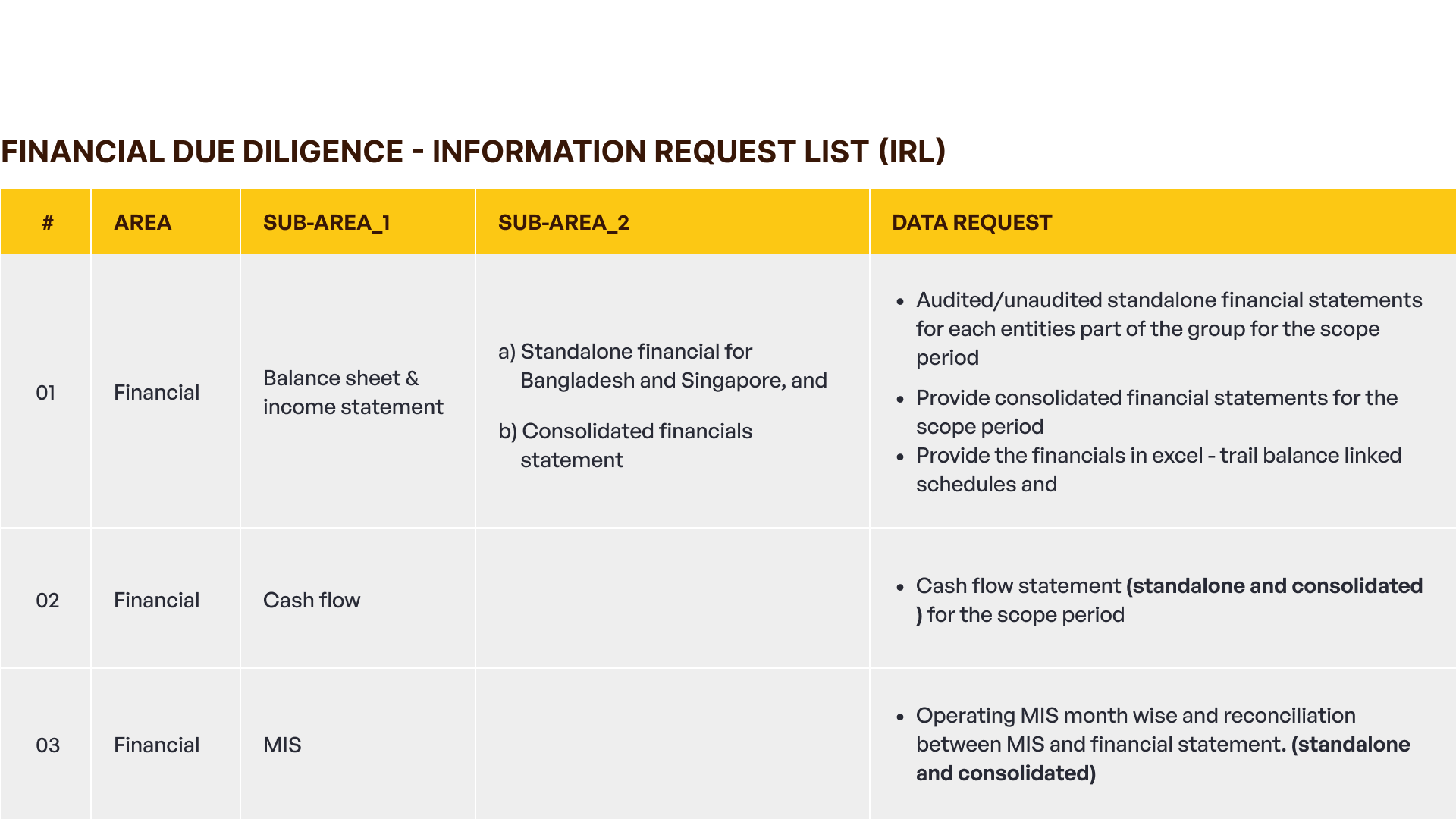
This is where FDD begins. Before investors assess growth or projections, they need to understand the financial foundation.
What this segment is really about:
Founders often encounter and worry about gaps between MIS and financial statements. This is a common issue. What matters is whether you can explain those gaps clearly.
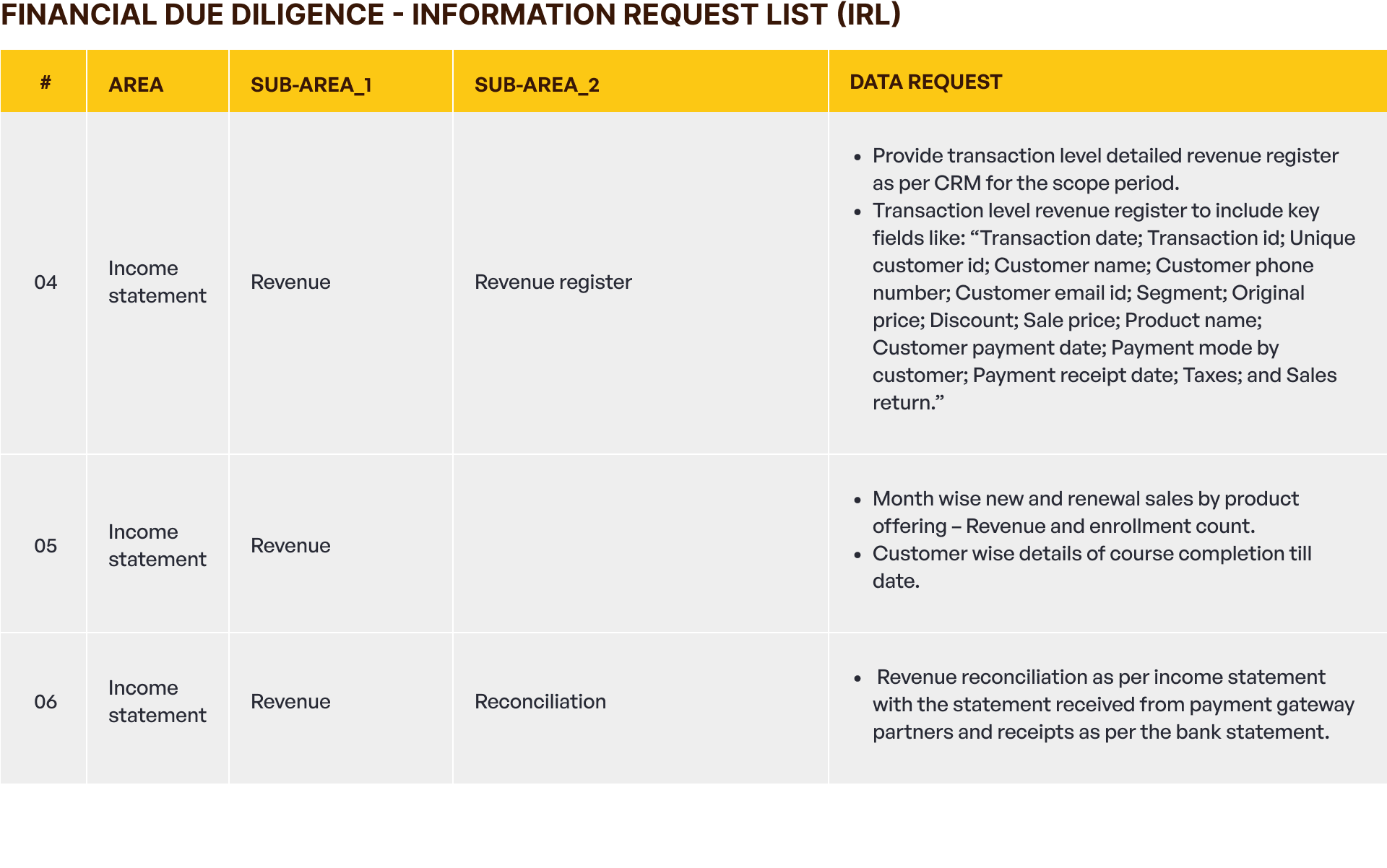
While investors review summaries, validation actually happens at the transaction level.
This segment shows:
Clean reconciliation between CRM, payment gateways, and bank statements builds credibility. Poor reconciliation leads to multiple follow-ups and delays fundraising.
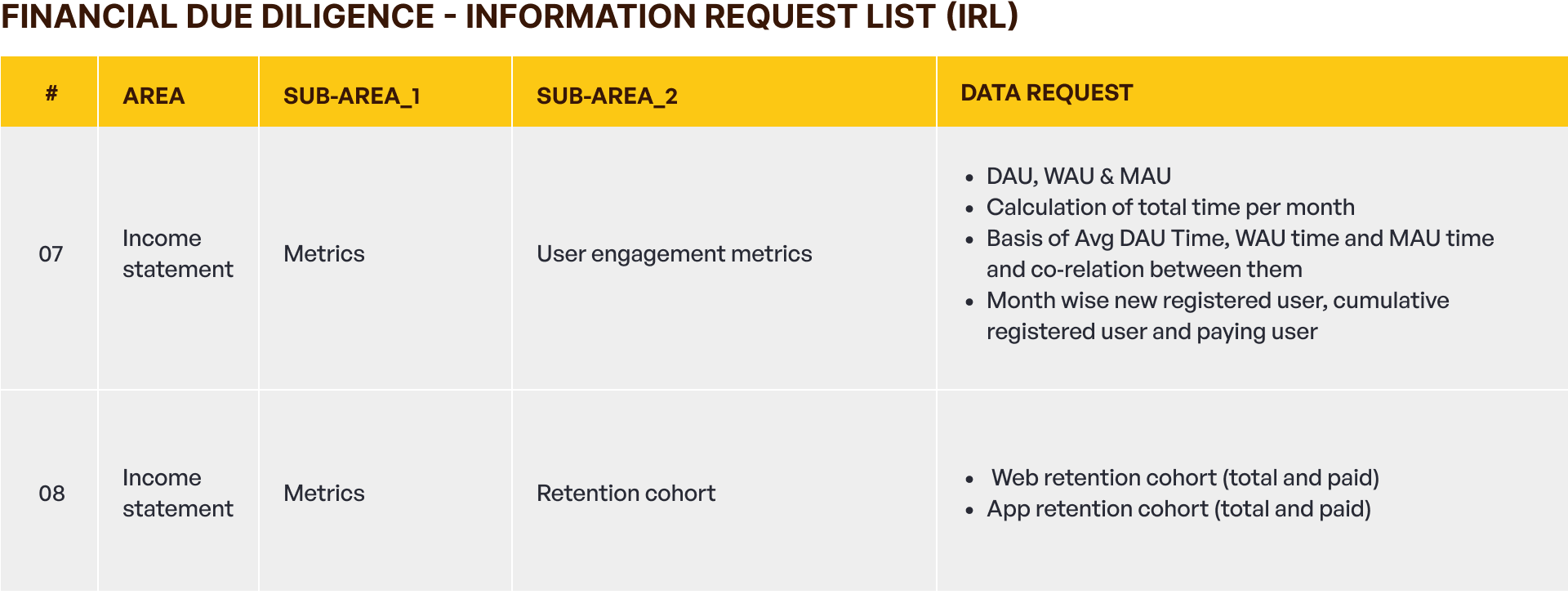
For digital and product-led startups, revenue alone is not enough. Investors want to know whether user behavior supports it.
Investors assess:
Founders sometimes treat metrics as storytelling tools. In FDD, they are validation tools. Weak retention does not automatically derail a deal. Unexplained or inconsistent retention data, however, introduces uncertainty into revenue sustainability assumptions.
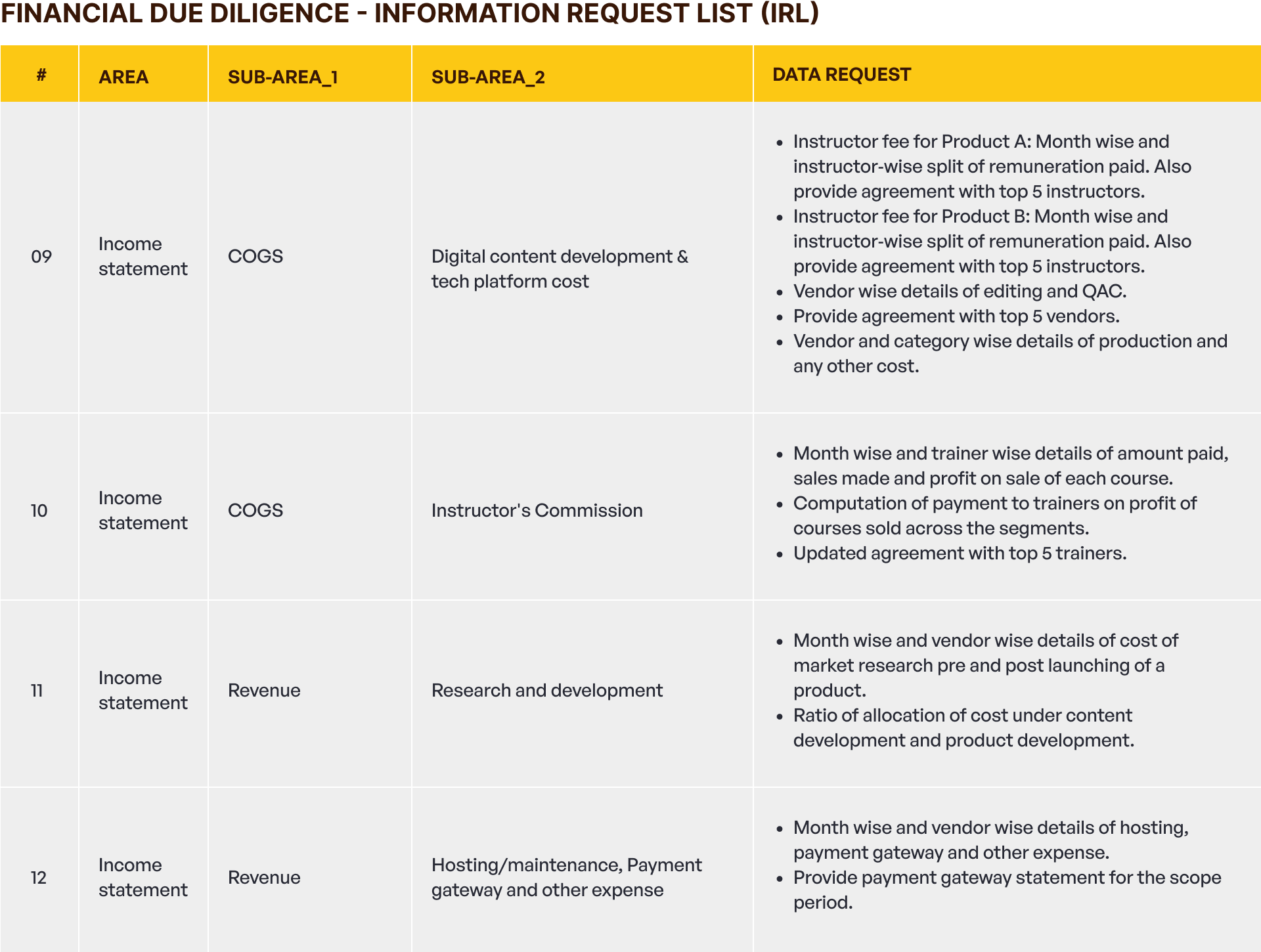
After validating revenue, investors ask a simple question: What does it cost to deliver this? This segment tests whether gross margins are appropriately calculated.
Review areas include:
If margins appear unusually strong relative to comparable companies, this section receives deeper scrutiny, and investors may challenge cost classification decisions.
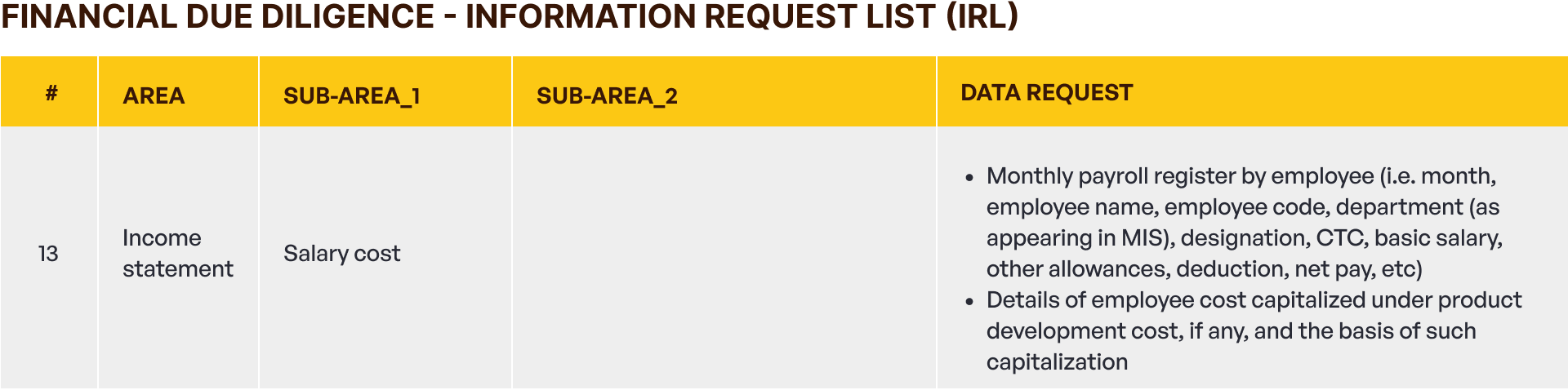
Payroll is usually the highest fixed cost and the hardest to adjust quickly.
What this segment is really about:
Founders should expect detailed questions here and have proper justification ready.
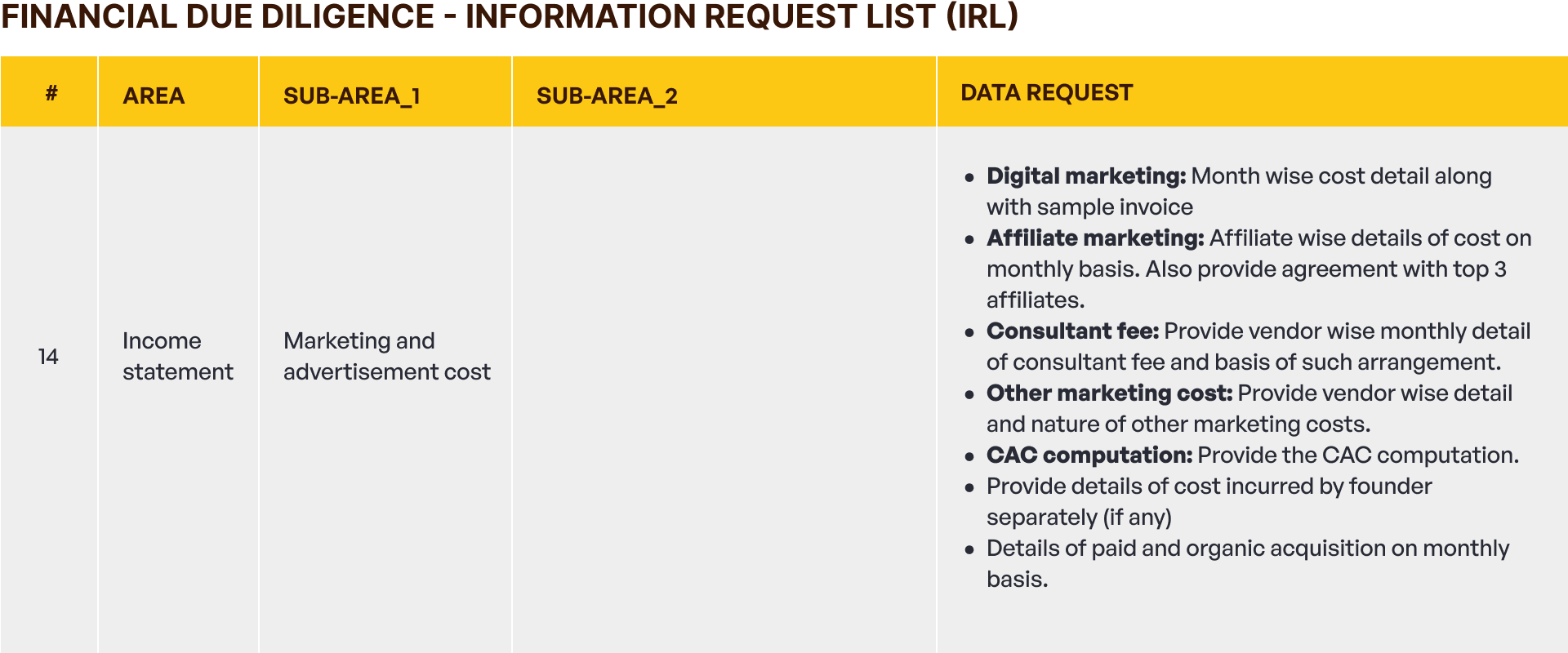
This is where investors evaluate whether growth is efficient and sustainable.
Investors analyze:
CAC levels do not need to be minimal, nor does growth need to be aggressive. What investors require is clarity on unit economics and scalability assumptions.
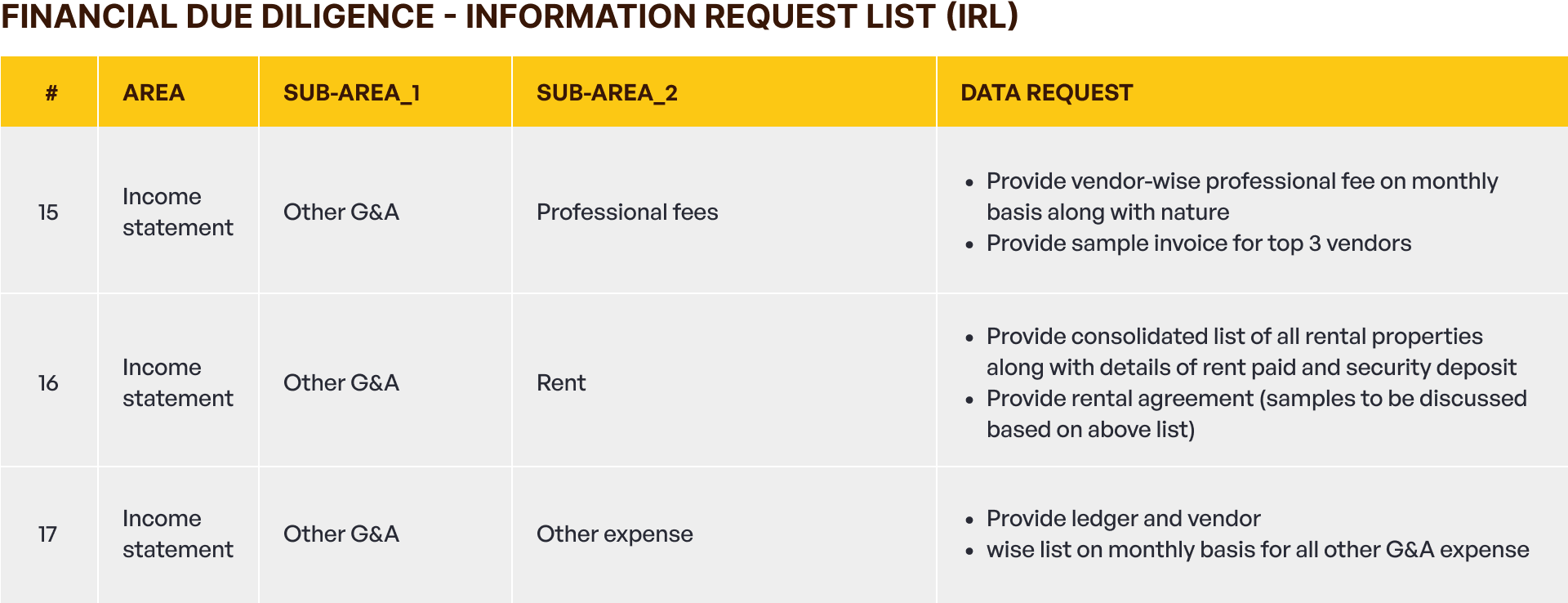
General and administrative costs reveal how the company operates behind the scenes.
This segment focuses on:
Investors assess whether overhead growth is proportional to company scale and whether fixed cost structure introduces downside risk. This section often highlights structural inefficiencies that may not be visible in topline metrics.
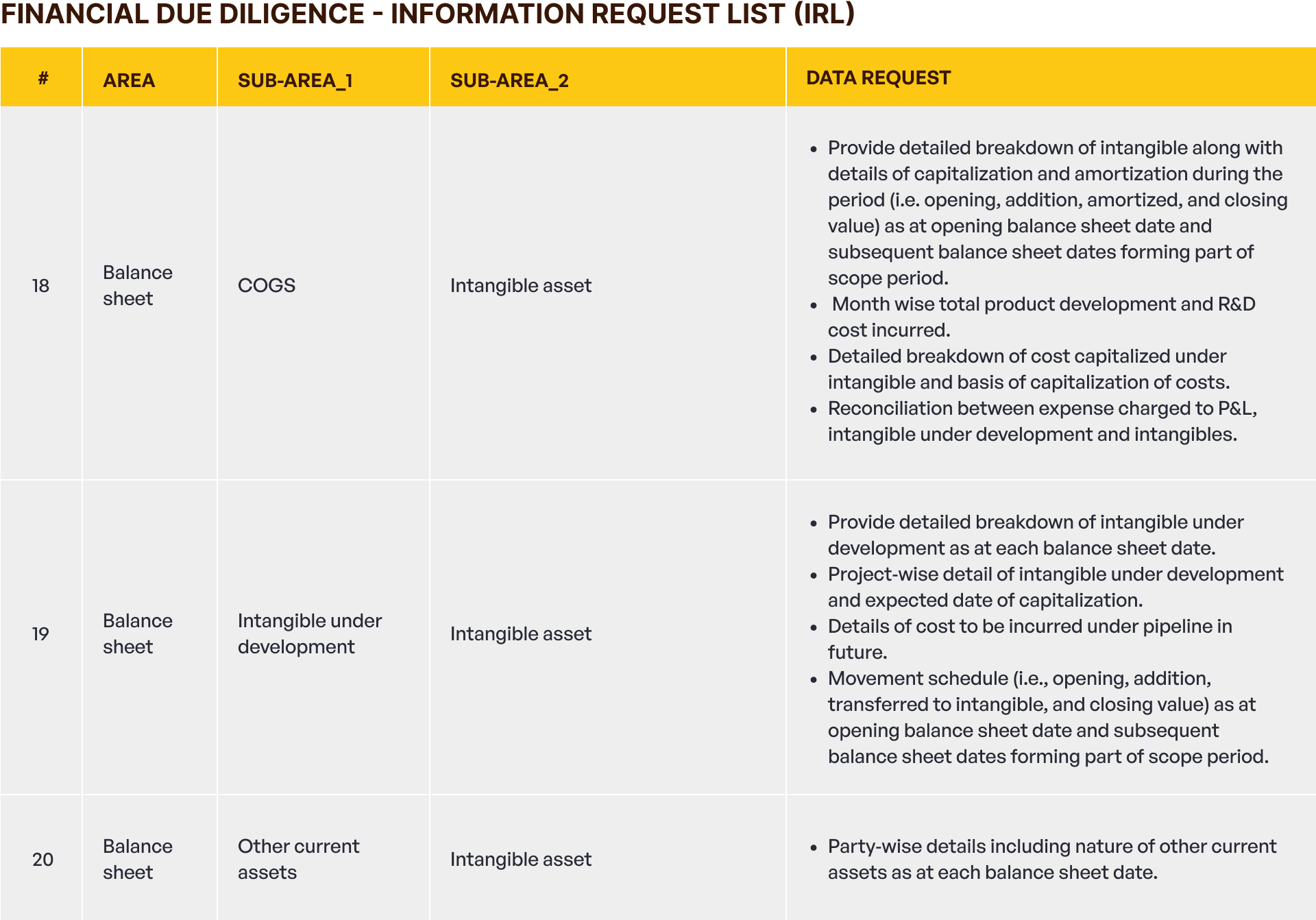
This is where accounting decisions directly affect reported performance.
Investors want to know:
Investors expect sound judgment here. They do not expect aggressive capitalization.
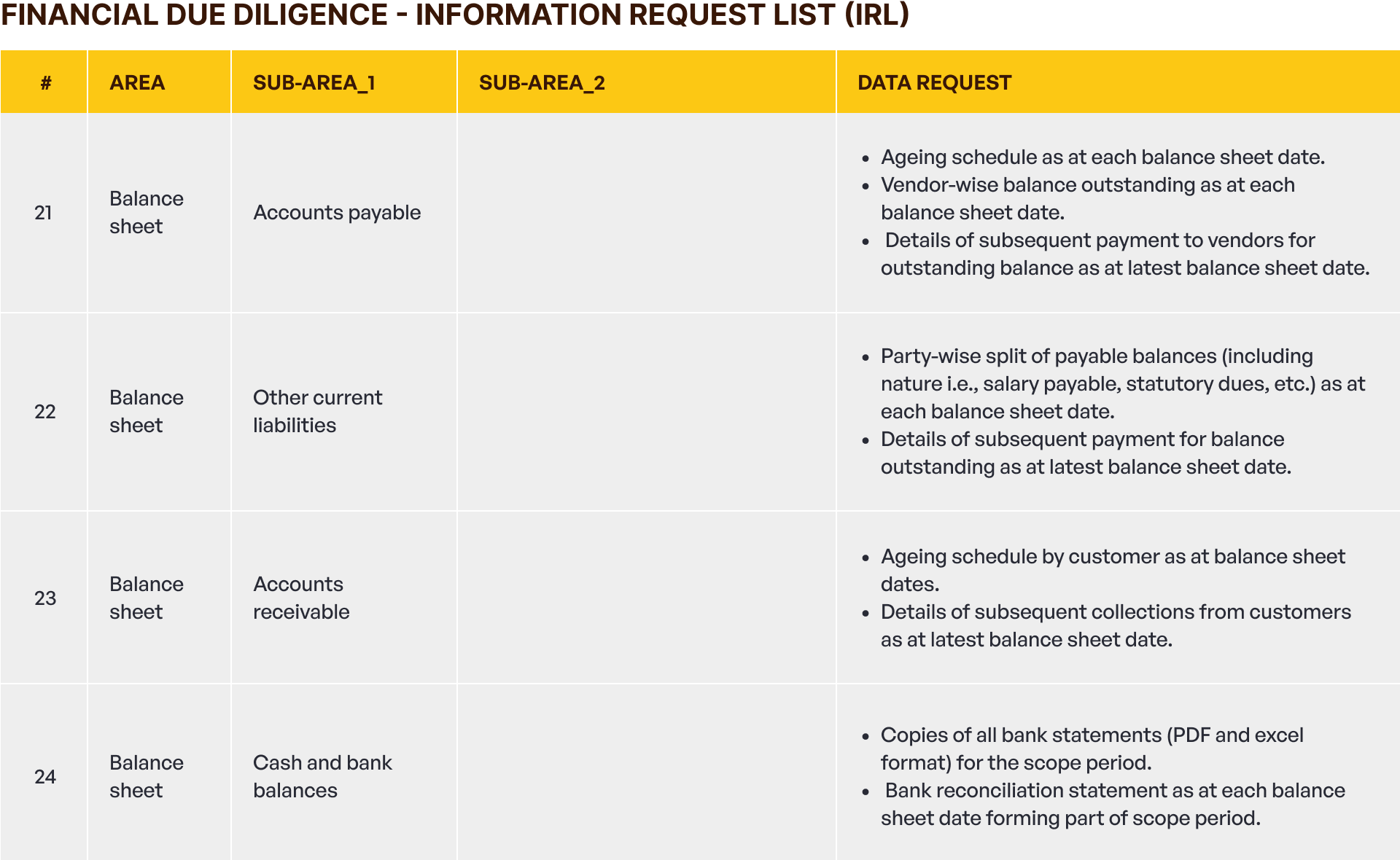
his demonstrates whether the business is financially stable day to day.
Key areas include:
Liquidity pressures typically surface here before appearing anywhere else.
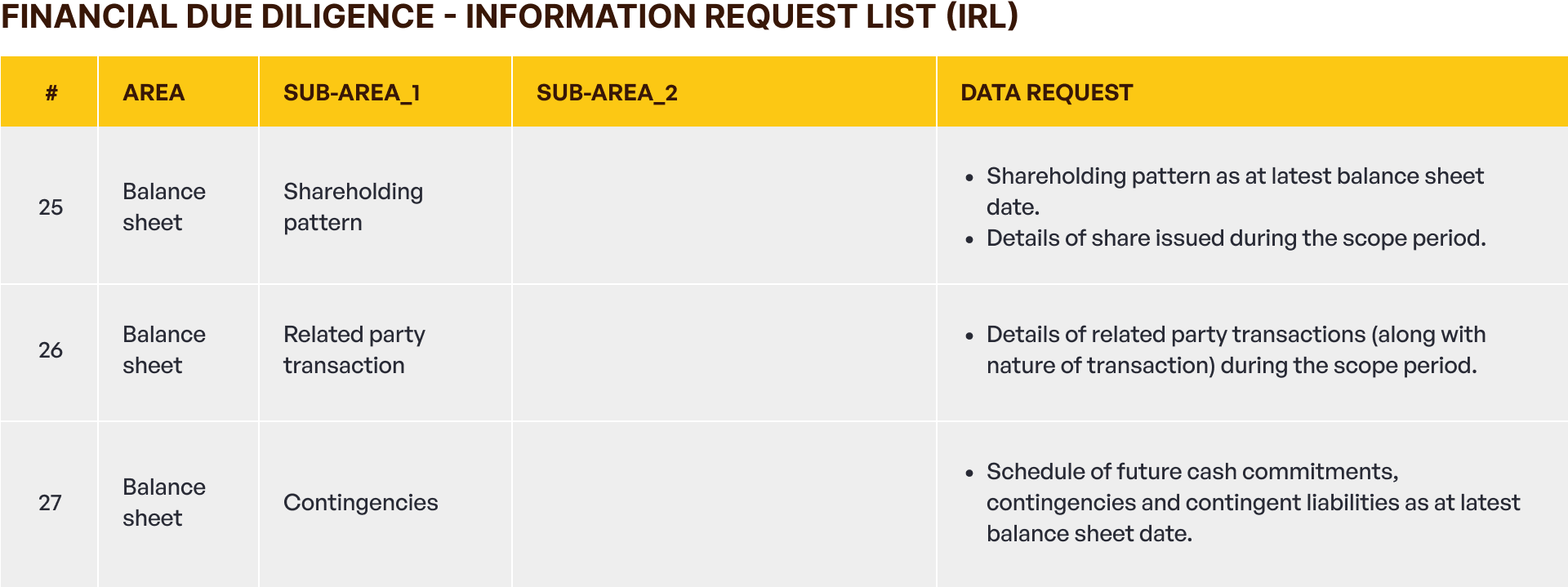
This final layer often carries a significant impact on the deal.
Investors review:
Undisclosed related party transactions or equity inconsistencies can materially delay deal closing, even if financial performance is strong.
Financial due diligence is not about perfection. It is about coherence, traceability, and risk transparency. Founders who can reconcile performance across financial statements, operational dashboards, and bank records reduce diligence friction and strengthen negotiation position.
.png)








.jpg)




.jpg)

.png)



















.jpg)
.jpg)


.jpeg)


.jpg)


.jpg)


.jpg)
.jpg)

.jpg)
.jpg)