BSIC, Backed By 39 Bangladeshi Banks, Launches US$35Mn Venture Capital Fund
Insight
Created:
May 13, 2026
Updated:
May 20, 2026
Subscribe to our Newsletter
Thank you! Your submission has been received!
Oops! Something went wrong while submitting the form.
On May 12, Bangladesh's banking sector did something it has never done before: it organised itself, at scale, to back the country's own startup founders. ONKUR — Bangladesh Fund I — is the inaugural vehicle of Bangladesh Startup Investment Company (BSIC) PLC, a USD 35 million pool drawn from 39 commercial banks under Bangladesh Bank's mandate to channel 1% of net profits into startup financing.
The name means seedling in Bangla — something planted with intention, built to grow. "Foreign funds have always been trusting us," BSIC Chairman Mashrur Arefin told the room, "while we were behind, supporting the new ventures by giving them equity. Today, that chapter — we are saying goodbye to that chapter."
Over the past decade, Bangladesh's startups attracted $1.1 billion in venture investment, producing companies — bKash, ShopUp, Pathao, Shikho — that have competed well beyond the country's borders. The question the ecosystem has been asking ever since is when domestic capital would show up at the same table as the foreign investors who built them. According to LightCastle Partners' 2025 annual startup investment report, 99% of that capital came from abroad — a gap BSIC is now structurally positioned to close.
A market built on foreign faith
While global startup funding rebounded 47% in 2025 to USD 469 billion, Bangladesh's growth-stage pipeline — companies with real traction that needed a serious institutional cheque to scale — remained largely underserved by domestic capital. That is the specific gap ONKUR is designed to close. "BSIC unlocks capital from commercial banks into Series A investments at scale," said Bijon Islam of LightCastle Partners, "while crowding in additional institutional capital. This will create momentum for the ecosystem to move forward.
How the fund works
What distinguishes BSIC structurally is how it is designed to compound over time rather than simply deploy. Rather than 39 banks each sitting on small, undeployed pools of mandated capital with no venture expertise, those contributions now flow into a single professionally governed vehicle where every year, 1% of net profits from all participating commercial banks flows back in — not as a top-up, but as the seed of the next fund. As Bangladesh's economy grows and the banking sector recovers, so does the contribution; a Tk 425 crore Fund I becomes a Tk 600 crore fund once foreign banks join, and that becomes the base from which Fund II is raised, then Fund III. "After this first fund is utilised by the young, entrepreneurial minds of the country," Arefin said, "we will be launching a second fund, third fund. In the VC world, it is always a journey."
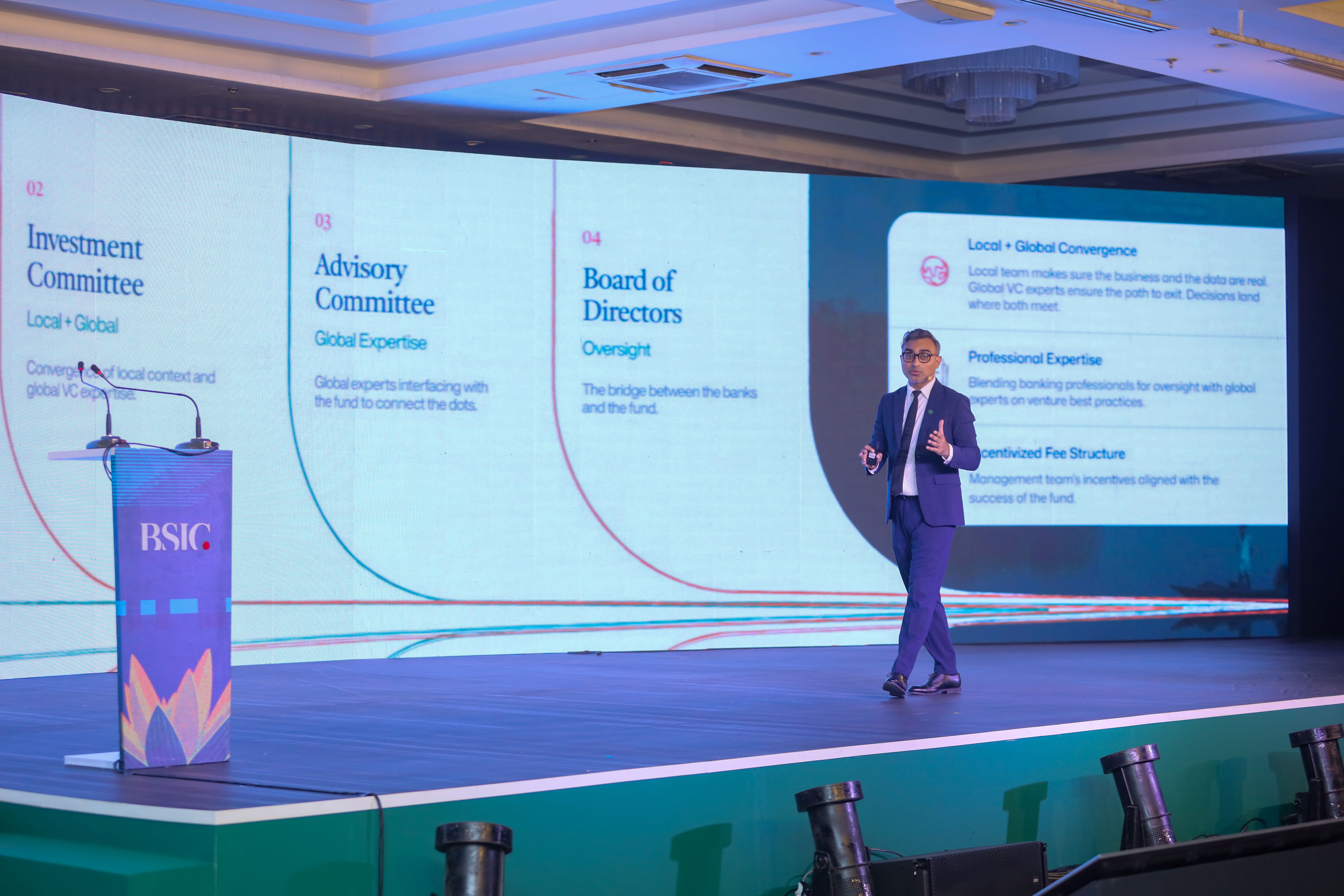
Rahat Ahmed, Founder & Managing Partner at Anchorless Bangladesh, and Consultant to BSIC, laid out the operating model at the launch around four interdependent governance layers: a local investment team working the ground, a global investment committee of venture professionals making final decisions, an advisory committee of international experts bridging board and investment team, and a board of five bank MDs. The investment thesis centres on co-investment — BSIC matches foreign VC leads, turning a local institutional commitment into a larger round and pulling in co-investors who have historically been entirely foreign — while portfolio companies gain preferential access to a Tk 500 crore non-dilutive working capital facility from Bangladesh Bank, debt that allows founders to grow without surrendering additional equity.
Rahat Ahmed, Founder & Managing Partner at Anchorless Bangladesh, and Consultant to BSIC, laying out the operating model of the fund at the launching ceremony in Dhaka on May 12, 2026
Ahmed projected that USD 35 million, deployed with discipline across fintech, healthtech, and agritech over a decade, could generate USD 500 million in additional raised capital through co-investment multipliers, 15,000 indirect jobs, and USD 2 billion in cumulative economic value. "This is a permanent vehicle for our founders," he said, "for Bangladesh to back its entrepreneurs for decades to come."
What the government is committing to
Bangladesh Bank Governor Md. Mostaqur Rahman traced the institutional history at the launch, acknowledging that the central bank's first attempt at a startup fund in 2021 — a Tk 500 crore facility — "was not very successful," and that a subsequent directive requiring all scheduled banks to ring-fence 1% of net profits for startups created the raw material but not the mechanism. BSIC is the result of years of consultation between BIDA, Bangladesh Venture Capital, and Startup Bangladesh, and his single substantive ask to the fund's board was unambiguous: "You will certainly select your projects independently. But our request is that those projects should somehow have an impact on the rural economy. Developing our rural economy is very urgent at this moment."
Amir Khosru Mahmud Chowdhury, Minister of Finance & Planning, called BSIC "a startup for startups" — capital designed to multiply rather than distribute — and framed the fund's core purpose around Bangladesh's demographic dividend: employing ten million people, expanding opportunity beyond traditional industries, and removing the two barriers that have historically blocked young entrepreneurs, access to funding and mortgage requirements. "Both of these are now removed here," he said, "and the sanctioning process will be transparent, efficient, and strictly professional." On political independence, he was direct: "There will be no political appointments in the banking sector or BSEC. Political appointments are short-sighted — they ultimately work against the government itself."
Bangladesh Bank Executive Director Husne Ara Shikha made the regulatory counterpart explicit, noting that venture capital "works differently from conventional bank lending" and that BSIC would need sufficient autonomy to make fast, commercially-driven investment decisions using equity, convertible notes, or SAFE structures rather than conventional banking products — a signal that the regulator intends to give the fund room to operate like a venture firm, not a bank subsidiary.
What founders and investors actually think
For founders navigating the gap BSIC is designed to close, the response was substantive rather than celebratory. Shahir Chowdhury, who left London in 2021 to build Shikho and has since raised from Wavemaker, Learn Capital, and Goodwater Capital — each writing their first Bangladesh cheque — was direct about what the fund actually solves: "The founder has to sell Bangladesh first. Every dollar we've raised required that work. BSIC is a signal that the people who have built capital in this country for many years are now trying to build the innovation economy. The first problem it will help us solve is the Series A gap."
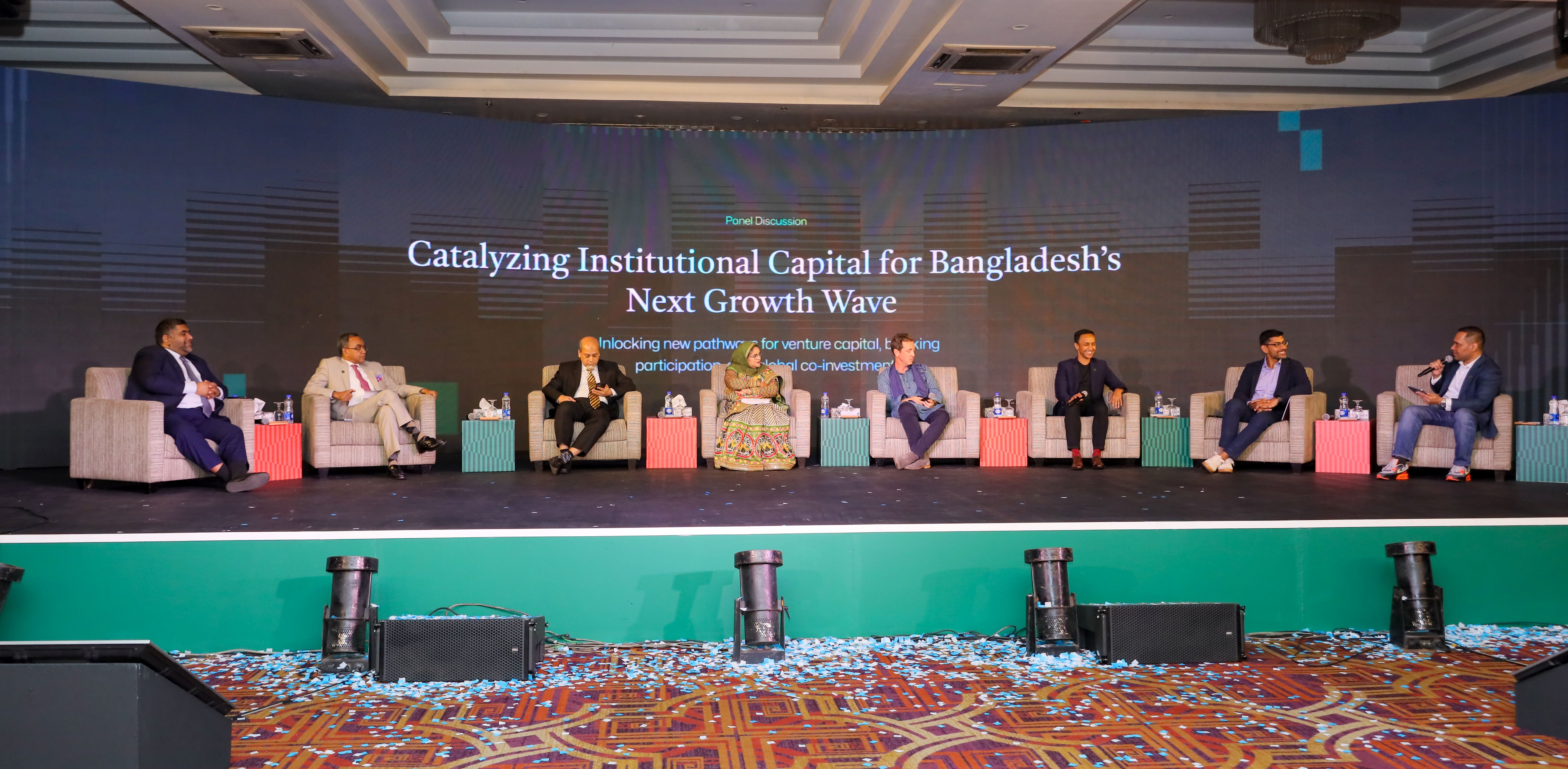
Panel discussion — "Catalyzing Institutional Capital for Bangladesh's Next Growth Wave" — ONKUR Bangladesh Fund I launch, Dhaka, May 2026. Moderated by Bijon Islam (LightCastle Partners), the session featured Tammer Qaddumi (VentureSouq), Shiv Choudhury (Wavemaker Growth), Shahir Chowdhury (Shikho), Syed Mahbubur Rahman (Mutual Trust Bank), Mohammad Ali (Pubali Bank), Tanveer Ali (Startup Bangladesh Limited), and Husne Ara Shikha (Bangladesh Bank).
The global VC perspective was sharper. Tammer Qaddumi of VentureSouq, a Dubai-based fund with early positions in both Pathao and ShopUp, brought the room's most pointed observation: the real test of BSIC will not be the volume of investments it makes but whether exits materialise, because "all the pomp and circumstance surrounds the investment phase" and "the real reward is when the company is sold and the founder walks out paying their investors." He also named a tension few others would speak openly about — the 39 banks backing BSIC are, in some cases, the same incumbents that the most disruptive portfolio companies will eventually threaten. "We are trying to find companies that will take market share away from these stakeholders," he said. "That tension is going to be very hard to manage." His advice to founders on ambition was equally direct: "Don't get myopic. The real champions will do well in this market as a launchpad — and then build outside."
Shiv Choudhury of Wavemaker Growth, which has backed Bangladeshi founders for five years, noted the qualitative shift BSIC represents beyond the capital figure itself: "What's changing is making it less about only exceptional founders and more about the ecosystem. When that happens, it gives us more confidence that there's systemic improvement." What Wavemaker still needs to see — and what Choudhury said would unlock significantly more growth-stage capital — is a genuine path to exits through capital market reform and liquidity options for scaling companies.
The hard part
BSIC's most urgent challenge is finding the right person to lead it. Syed Mahbubur Rahman of Mutual Trust Bank, a board director, described the requirement plainly: the fund's leader needs what he called "dual fluency" — able to manage 39 banking shareholders and Bangladesh Bank on one side, and founders, startups, and international co-investors on the other. "I'm not sure whether that individual exists in the market in Bangladesh," he said. "But we need to find them."
BSIC aims to make its first three investments before year-end, and those early deals will determine everything that follows: whether Fund II attracts more capital, whether international co-investors begin treating Bangladesh as a deliberate allocation rather than an opportunistic one, and whether a country that has watched its best companies get funded from abroad can finally back them from home. "There has to be a series of investors," Bijon Islam said, "not just where Wavemaker sits, but what comes after, and then of course the capital market." The architecture is in place. What gets built inside it is the only question left.
Heading 1
Heading 2
Heading 3
Heading 4
Heading 5
Heading 6
Lorem ipsum dolor sit amet, consectetur adipiscing elit, sed do eiusmod tempor incididunt ut labore et dolore magna aliqua. Ut enim ad minim veniam, quis nostrud exercitation ullamco laboris nisi ut aliquip ex ea commodo consequat. Duis aute irure dolor in reprehenderit in voluptate velit esse cillum dolore eu fugiat nulla pariatur.
Lorem ipsum dolor sit amet, consectetur adipiscing elit, sed do eiusmod tempor incididunt ut labore et dolore magna aliqua. Ut enim ad minim veniam, quis nostrud exercitation ullamco laboris nisi ut aliquip ex ea commodo consequat. Duis aute irure dolor in reprehenderit in voluptate velit esse cillum dolore eu fugiat nulla pariatur.
The Vision Pro’s FaceTime leverages spatial computing and spatial audio to create a virtual meeting space. FaceTime life-sized video tiles make the experience more immersive. You can also use other collaboration apps and simultaneously work with the team on the same documents. The Vision Pro headgear seamlessly blends digital content with the real-world environment to create an immersive experience.
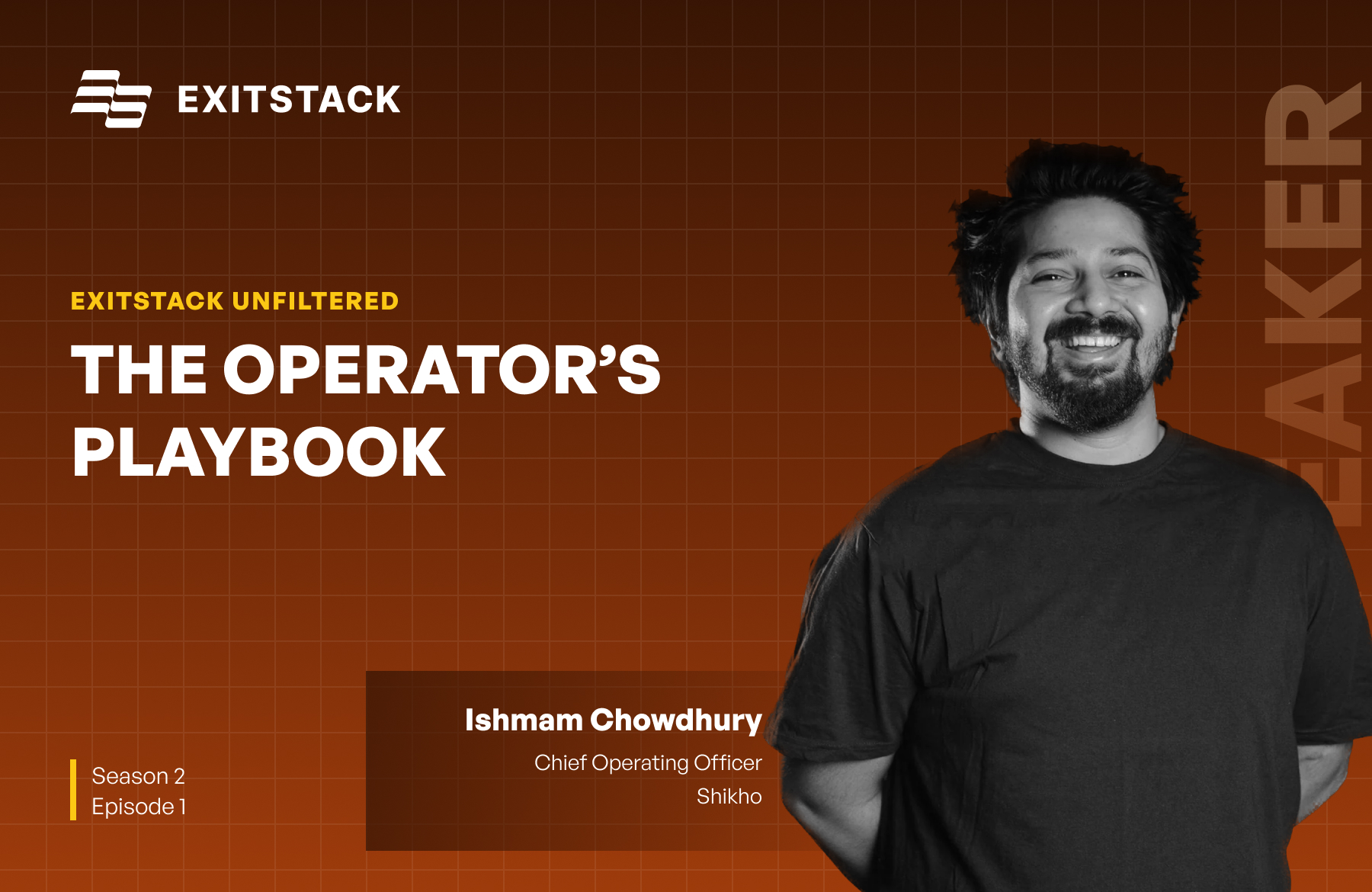
On the first episode of ExitStack Unfiltered Season 02, Shikho COO Ishmam Chowdhury discusses automation, AI-first adoption, keeping a growing team aligned, and why operators should measure everything.
Apple completed its acquisition of Sonera Magnetics, co-founded by BUET graduate and UC Berkeley professor Sayeef Salahuddin, in May 2026. The startup built compact sensors that detect magnetic signals from the brain, nerves, and muscles.
Startup Bangladesh has launched a US$33Mn Fund of Funds to channel public capital through professional venture fund managers. Here's what it means for founders, fund managers, and investors.






.png)




.jpg)




.jpg)
.png)















.jpg)
.jpg)


.jpeg)


.jpg)


.jpg)


.jpg)
.jpg)

.jpg)
.jpg)