
Ellipsis Health, Backed by Khosla Ventures and Salesforce, Makes TIME’s 2026 HealthTech List
Ellipsis Health, a San Francisco-based company founded in 2017, is among 500 companies featured in this year’s ranking.



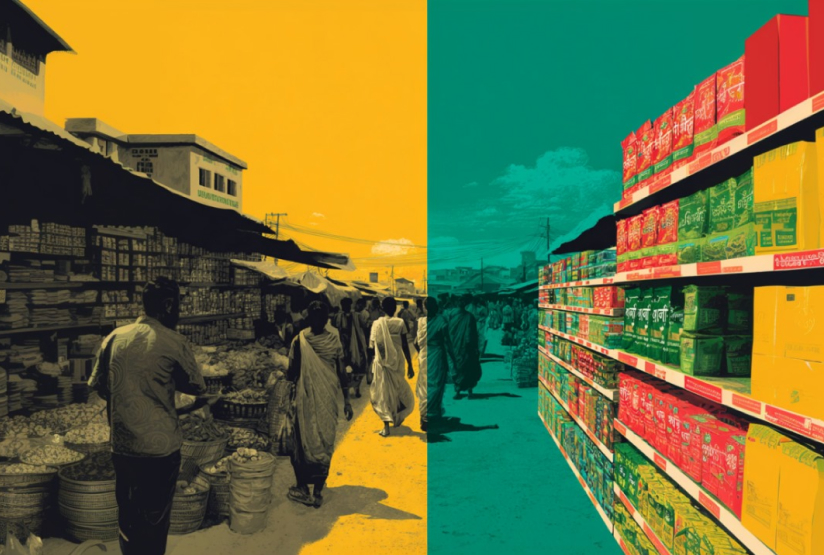
Thumbnail Credit: Zarif Faiaz/The Daily Star
Editor's Note (October 2026): Since this article was published, MyAlice has rebranded as Revora, announced alongside its US$2Mn Seed round. References to MyAlice below reflect the company's name at the time of publication.
The Arbitrage Hiding in Plain Sight
In April 2025, ShopUp, Bangladesh’s one of the most-funded startups and its largest B2B commerce platform, merged with Sary, the leading B2B marketplace in the Gulf, to form Silq Group. The deal was backed by US$110Mn in funding led by Sanabil Investments, a wholly owned subsidiary of Saudi Arabia’s US$925Bn Public Investment Fund, alongside Peter Thiel’s Valar Ventures, Tiger Global, and Qatar Development Bank. ShopUp’s founder and CEO, Afeef Zaman, took the helm of the combined group. The merged entity now serves over 600,000 businesses, has processed more than US$5Bn in transactions, and has facilitated US$750Mn in embedded financing across the Gulf and South Asia.
That a company built and scaled in Dhaka now sits at the center of one of the world’s most consequential emerging trade corridors, a Gulf–South Asia route projected to reach US$682Bn, is not a coincidence. It is the outcome of a deliberate, compounding set of advantages that a growing cohort of Bangladeshi founders have learned to harness.
This article documents that cohort. It maps eleven companies across sectors, SaaS, AI, ecommerce, travel, workforce, and fintech, that are earning meaningful revenue beyond Bangladesh’s borders. More importantly, it attempts to extract from their collective experience a replicable set of principles: a blueprint for founders who want to build globally competitive companies from Bangladesh, and a framework for investors assessing what is fast becoming one of the more underappreciated opportunities in emerging market technology.
The question is no longer whether Bangladesh can produce globally competitive startups. The question is how quickly the ecosystem can absorb the lessons of the companies already doing it.
Mapping the Landscape: Bangladeshi Startups Competing Globally
The eleven companies profiled below (Airwork, Apploye, Dorik, EzyCourse, GoZayaan, Markopolo, Monsha, MyAlice, Pathao, and ShopUp) represent a cross-section of sectors, revenue models, and expansion strategies. Some are building pure-play global SaaS products from day one. Others began locally and found that their technology and operational excellence translated, sometimes unexpectedly, into competitive advantage in international markets. A few are in the earliest stages of their global journey, having only recently secured international funding or accelerator placements. What unites them is that each has found a way to generate revenue, traction, or validated demand outside Bangladesh.
.png)
Reading the Map: Key Observations
Several patterns emerge immediately from reviewing these companies as a group. First, the concentration of SaaS and AI-native companies is striking, the majority are building software products for global buyers rather than platform businesses dependent on local infrastructure. This is a deliberate structural choice: software has no customs duty, no supply chain, and requires no physical presence in the buyer’s market.
Second, SEA and MENA are the dominant expansion geographies, with the US and Europe appearing primarily for SaaS companies whose distribution relies on product-led growth and global platforms rather than direct sales. This geographic clustering is examined in detail below.
Third, the presence of two companies, Markopolo and Monsha, having secured entry into elite Silicon Valley programs (HF0 and LAUNCH Accelerator respectively) signals an important shift: global gatekeepers are beginning to recognize the quality of product and team emerging from Dhaka. Both were accepted on the merit of their technology and founding teams, not as a concession to geography.
Shared Foundations: Patterns Across the Winners
Examining these eleven companies across their founding stories, go-to-market approaches, and current trajectories, a set of recurring structural traits emerges. These are not universal to every company on the list, but they appear with sufficient frequency to be considered meaningful patterns rather than isolated coincidences.
Product Orientation from Day One
The most globally competitive companies on this list were built as products, not as services businesses that evolved into products. Dorik, Apploye, EzyCourse, MyAlice, and Markopolo all launched with the explicit intention of selling software subscriptions to buyers who would never visit Dhaka, never speak to a salesperson, and would judge the product entirely on what it delivered on screen. This product-first orientation shapes hiring, roadmap prioritization, and pricing decisions in ways that compound over time.
Companies that began as service businesses and then tried to productize, a common trajectory in Bangladesh’s tech sector, tend to carry organizational habits that slow the transition. The globally competitive companies on this list largely avoided that path.
International Entity Structure
Almost without exception, the companies earning meaningful global revenue have established legal entities outside Bangladesh, typically Singapore or the United States (Delaware). This is not merely administrative. It is a prerequisite for accessing international payment infrastructure, raising from global investors, and building the credibility expected by enterprise buyers in Western and Gulf markets. Monsha is incorporated in the United States. MyAlice operates through Alice Labs Pte. Ltd. in Singapore. Airwork’s parent entity is Remotely Technologies Inc.
Bangladesh’s regulatory environment around foreign currency, international bank accounts, and investment structures continues to create friction for companies operating this way. The founders who have succeeded internationally have navigated this friction rather than waiting for it to resolve.
Founder Profile: Technical Depth with Commercial Ambition
Across this cohort, founding teams consistently combine strong engineering backgrounds, often from BUET (Caltech of Bangladesh) or leading Bangladeshi universities, with early exposure to commercial or international contexts. Markopolo’s co-founders bring machine learning engineering and MBA-level product management. Monsha and MyAlice’s founders hold BUET degrees and have prior startup building and exit experience. Airwork’s founder has built a media presence extending to US television. GoZayaan’s founder previously built Bangladesh’s largest digital marketing agency and exited.
This combination, technical capability paired with commercial orientation and international exposure, appears to be a more reliable predictor of global success than either trait alone.
Willingness to Serve Overlooked Markets
Several of these companies found early traction specifically because they were willing to serve buyer segments that larger, better-funded competitors had passed over. MyAlice’s original thesis was that the markets most reliant on messaging-based commerce, Southeast Asia, South Asia, MENA, were being underserved by the Zendesks and Freshdesks of the world, whose products were designed for Western enterprise workflows. Airwork built for companies seeking talent from emerging markets at a time when most recruitment platforms focused on developed market talent pools.
Serving overlooked markets is not a consolation strategy, it is often the only path to early traction when competing without the brand, capital, or distribution networks of incumbents.
The Talent Arbitrage Thesis: A Structural Advantage, Not a Temporary One
The phrase ‘talent arbitrage’ risks being misread as a polite description of cheap labor. It is something more durable and more interesting than that.
Bangladesh produces approximately 300,000 engineering and technology graduates annually. BUET alone sends graduates into global companies including Google, Meta, Amazon, and top-tier financial institutions. The supply of technically capable talent is large, growing, and increasingly well-credentialed. The cost of that talent, relative to comparable capability in Western markets, remains dramatically lower, typically 70 to 85 percent below US equivalents for senior engineering roles.
This cost differential is the starting point of the arbitrage thesis, but not its most important element. Unlike India, where salary inflation has significantly compressed cost advantages, Bangladesh's talent market has expanded supply faster than demand. The advantage is structural, not cyclical. A cyclical cost advantage comes and goes with hiring booms and busts; a structural one is rooted in sustained supply expansion. Bangladesh is still producing engineers faster than the local market can absorb them, which means the cost advantage is unlikely to erode the way India's did..
A company building a US$20/month SaaS product with a Dhaka-based engineering team operates at unit economics that a San Francisco or London-based competitor cannot replicate. The margin created by that cost differential can be reinvested in product, growth, or simply held as competitive pricing power.
Airwork is perhaps the most direct articulation of this thesis as a business model, the company exists to connect global employers with pre-vetted technical talent from emerging markets, and claims hiring cost reductions of 50 to 80 percent for its clients. But the thesis applies equally to every company on this list that is building its product team in Dhaka while selling subscriptions to buyers in the US, Europe, or the Gulf.
There is a second dimension to the talent arbitrage that is less often discussed: the quality of product iteration that becomes possible when engineering cost is lower. A Dhaka-based company can afford to run more experiments, build more features, and iterate faster than a competitor burning through high-cost engineering hours. EzyCourse competes against Kajabi, Teachable, and Thinkific, products with significantly more capital behind them, and matches or exceeds their feature velocity in part because the cost per shipped feature is structurally lower.
The Direction of Capital Flows: Why SEA and MENA Over US and Europe
The conventional aspiration for an emerging market startup is to crack the US market. It remains the largest, most liquid, and most prestigious destination for technology companies. But for a growing number of Bangladeshi founders, it is not the first market, and increasingly, it is not the right first market.
The SEA and MENA Opportunity
Southeast Asia and MENA share a set of structural characteristics that make them particularly accessible to Bangladeshi companies. Both regions are undergoing rapid digitization of commerce, logistics, and financial services, processes that developed markets largely completed a decade or more ago. The buyers in these markets are thus solving problems that Bangladeshi founders have often solved domestically: fragmented distribution, messaging-based customer service, unbanked SME populations, limited formal credit infrastructure.
MyAlice’s expansion into MENA is illustrative. WhatsApp-based commerce is not a fringe behavior in Saudi Arabia or the UAE, it is the dominant mode of customer interaction for a significant portion of the SME market. A product built to serve WhatsApp-first commerce in Bangladesh translated directly into product-market fit in the Gulf. The cultural and operational familiarity with messaging-led commerce gave MyAlice an edge that a US-built competitor would have needed years of market research to develop.
GoZayaan’s expansion into Pakistan follows a similar logic. The travel booking infrastructure problems GoZayaan had solved in Bangladesh, fragmented airline inventory, cash-dominant payment behavior, low trust in online transactions, were present in near-identical form in Pakistan. Rather than entering a new market with a foreign product, GoZayaan entered with a product already adapted for the problem context.
The Gulf–South Asia Corridor
The ShopUp/Silq merger crystallizes what may become the defining trade thesis of the next decade for this region. More than 4.5 million* Bangladeshis live and work in the Gulf (*The regional number is an estimate of what the distribution of the current stock migrant workers would look like in destination countries based on data from various sources). Remittances from Gulf-based Bangladeshi workers constitute one of Bangladesh’s primary sources of foreign exchange. The supply chain relationships between Bangladeshi manufacturers and Gulf-based distributors are longstanding and deep.
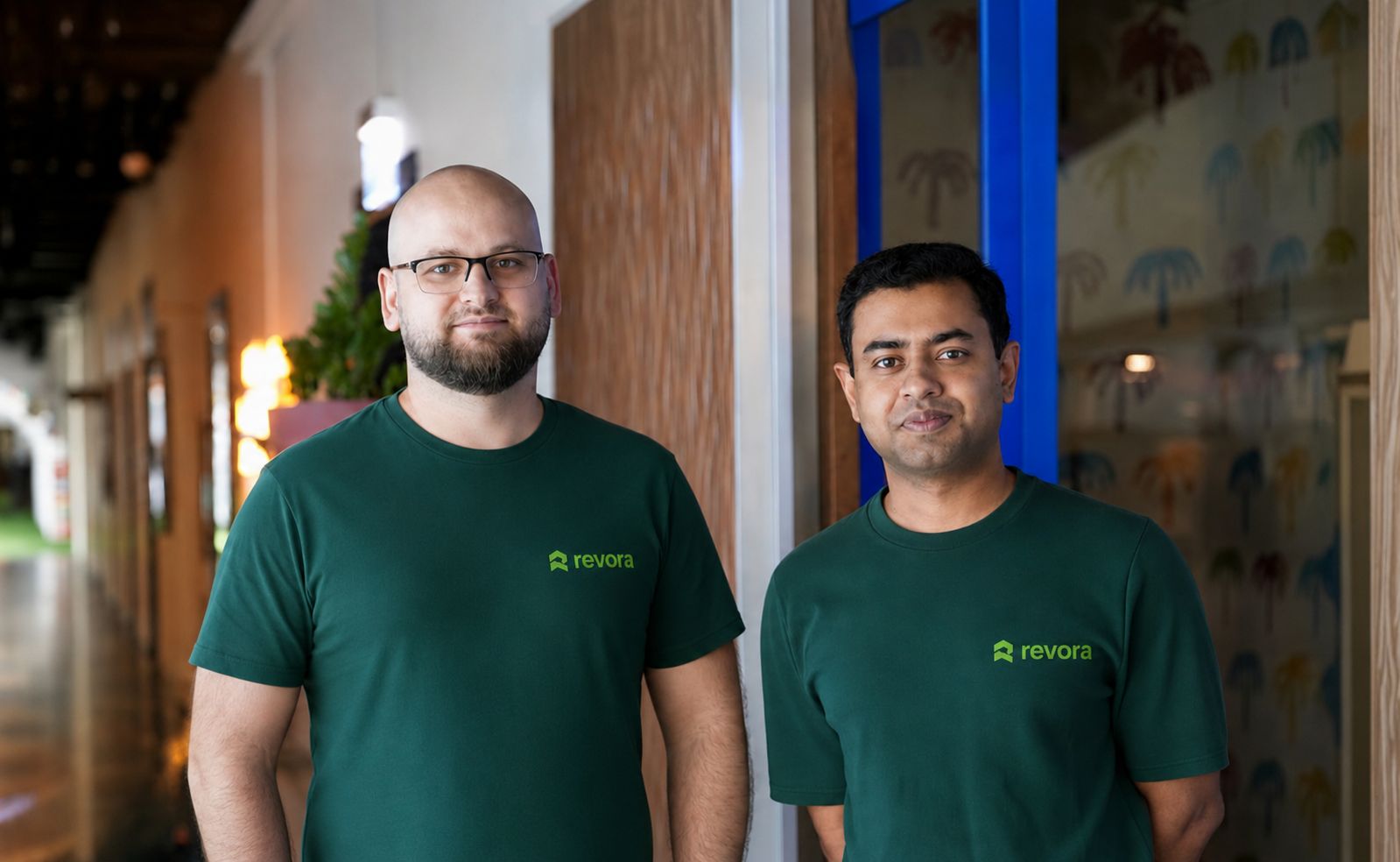
“We expanded to MENA because the problem is most visible there. The region's e-commerce market has been growing fast but the infrastructure powering it is still largely people and chat threads. WhatsApp, IG, TikTok isn't a support channel for merchants here, it's where they actually sell. Orders, product questions, payment follow-ups; all of it handled manually, at scale. We saw merchants doing real volume that way and realized the tooling hadn't caught up. That's the gap we went after”, added Shuvo Rahman, Co-Founder & CEO of MyAlice.
What Silq is building, a B2B commerce platform connecting Gulf merchants with South Asian manufacturers, underpinned by embedded financial services, is in effect a technology layer on top of a trade corridor that already exists. The US$682Bn projected size of that corridor over the next decade is not a speculative number; it reflects the scale of commerce already flowing between two regions that have been economically intertwined for decades.
For founders, the practical implication is clear: proximity, cultural, operational, and increasingly commercial, should factor heavily in market selection. The US market is large, but it is also deeply competitive, expensive to enter through direct sales, and culturally distant. SEA and MENA offer comparable or larger total addressable markets for many product categories, with lower customer acquisition costs, higher founder-to-market affinity, and less entrenched competition.
Rahat Ahmed, Founder & Managing Partner of Anchorless Bangladesh, sees the capital side of that corridor shifting in real time: "Regional opportunity and regional capital are converging at the same time, and Bangladeshi founders are sitting right at the intersection. Middle East and Southeast Asian investors are starting to understand and value the Bangladeshi talent and cost base, and that bodes well for founders who can think big and nail their go-to-market. In the process, Bangladesh will organically create a new generation of founders who create jobs and build industries for the next decade."
Observations from the Ground: What Separates Global Companies from Local Ones
Having invested in several of the companies on this list and met the founders of most others, a set of observations has emerged about what consistently differentiates the companies that have broken through internationally from those that have not. These observations are offered not as a definitive framework but as a practitioner’s read of patterns observed across multiple founding teams and business models.
The Inflection Point: When Local Traction Becomes a Liability
Several Bangladeshi companies have built strong local businesses and then found that local traction creates organizational inertia that slows international expansion. Revenue from local customers is real, predictable, and generates demands, feature requests, support requirements, pricing constraints, that can crowd out the focus needed to crack a new market.
The companies that have navigated this successfully tend to have made an explicit, often uncomfortable, decision: to treat international expansion as the primary objective and local revenue as a secondary concern, at least for a defined period. MyAlice’s early expansion into SEA and MENA was a deliberate choice to pursue markets where the product could command higher price points and serve as the foundation for institutional fundraising, rather than deepening penetration in a local market where pricing power was constrained.
Distribution Is the Moat
In the companies that have achieved durable global revenue, distribution, not product, is usually the primary competitive advantage. Dorik’s growth to 100,000+ global users was built substantially through Product Hunt launches, SEO content, and community-led distribution, not through direct sales. The platform has also attracted coverage from a16z, one of the most reputable VC firms in the world, which featured Dorik in one of their articles on emerging software tools, a meaningful signal of its standing among globally recognized voices in technology. Apploye’s global customer base across 60+ countries was built through G2, Capterra, and product comparison platforms that give SaaS buyers in any geography the ability to discover and trial a product without any salesperson involvement.
Markopolo’s co-founders’ acceptance into HF0, the San Francisco founder residency, is as much a distribution milestone as a product one. The network, credibility, and investor access that comes from a program of that selectivity is a form of distribution capital that compounds.
Capital Efficiency as a Feature
Bangladeshi startups raising from global investors increasingly present their cost structure not as a constraint but as a competitive feature. Pathao, having raised US$50Mn+ and achieved profitability, is a credible demonstration that a consumer technology super app can be built sustainably in a market that developed market investors once considered too difficult. The companies on this list that have attracted MENA-based capital, Pathao led by VentureSouq, ShopUp anchored by Saudi Arabia’s PIF, have benefited from a new cohort of emerging market investors who understand cost structure advantage in a way that traditional US or European VCs often do not.
The Blueprint: Principles for Founders Building for Global Revenue
The following principles are derived from observing what the companies on this list have done in common, as well as what the most common points of failure look like for Bangladeshi companies that have attempted global expansion and fallen short. They are offered as heuristics, not prescriptions.
The Thesis Has Already Been Proven
For global investors assessing Bangladesh’s technology sector, the companies in this article offer a more useful frame than macroeconomic indicators or ecosystem league tables. They demonstrate that the talent base is real, the ambition is real, and the global market validation, from Silicon Valley accelerators, Saudi sovereign wealth funds, and MENA venture firms, is beginning to confirm what a small number of early-conviction investors have believed for a decade.
The thesis is no longer that Bangladesh might produce globally competitive technology companies. The thesis is that it is already producing them, that the structural conditions enabling this are durable, and that the window for early-stage investment at compelling valuations will not remain open indefinitely.
ShopUp became Silq. Pathao attracted the Gulf capital. MyAlice expanded to MENA. Markopolo entered HF0. Monsha landed in a San Francisco accelerator. These are not isolated data points. They are early readings of a compounding trend.
The blueprint exists. The question, for both founders and investors, is whether the ecosystem moves fast enough to capitalize on it.
This article was originally published at The Daily Star.
.png)









.jpg)



.jpg)

.png)















.jpg)
.jpg)


.jpeg)


.jpg)


.jpg)


.jpg)
.jpg)

.jpg)
.jpg)