This is a contributor piece by Mehedi Mahmood, Founder and CEO of Social Square, a UGC marketplace in Bangladesh. The author works commercially in the industry this article covers, and the Fresh Cola campaign cited was his own work. Views and market observations are the author's own.
Something changed in how consumer technology companies grow. For a decade the default was performance advertising: pour money into Meta and Google, measure the cost to acquire a customer, and scale whatever worked. In the last two years a different engine has taken over, especially among the fastest-growing apps coming out of San Francisco. That engine is the UGC creator program.
The term is worth defining, because it gets confused with influencer marketing. In traditional influencer marketing, a brand pays someone with a large audience to promote its product to their followers—essentially renting their audience and their trust for a post or two. A UGC (user-generated content) program is a different animal. A brand hires dozens of creators, most of them small, to produce a steady stream of native-looking videos on dedicated accounts built around its product. Instead of renting an audience, the brand pays for creative labor at volume and lets the platform algorithm decide which videos find viewers. Because short-form platforms like TikTok and Instagram Reels reward the content itself rather than follower count, a brand-new account with zero followers can still go viral. That single fact is the foundation of the whole model.
Why did the shift happen? The economics of attention moved. Meta's average cost per thousand impressions hit US$10.88 in the first quarter of 2025, up 19.2 percent year over year, according to Right Side Up's analysis using Varos data across a panel of more than 6,000 companies and US$4Bn in annual spend. Paid acquisition keeps getting more expensive as more advertisers crowd the same feed. At the same time, younger consumers have grown allergic to anything that looks like an ad. Forrester Research found that just 22 percent of younger consumers trust social media advertising. Money spent on polished, obviously paid creative now buys less trust and fewer installs than it used to. The industry has voted with its budgets. The Interactive Advertising Bureau's 2025 Creator Economy Ad Spend and Strategy Report projects U.S. creator ad spend at US$37Bn in 2025, a 26 percent jump in a single year and roughly four times faster than the overall media industry's 5.7 percent growth, with 48 percent of advertisers now calling creators a "must buy."
The operators running these programs describe the mechanics in unusual detail.
Wispr Flow, a voice-dictation app, published the most detailed playbook. CEO Tanay Kothari claims the company hit 500 million views in 60 days with a program built almost single-handedly by a 19-year-old intern, Tobin Tang. Kothari's public breakdown lists three mechanics worth stealing.
- First, autonomy: creators got full creative freedom for half their content, which he claims kept them from feeling like sellouts and stopped them defecting to other brands.
- Second, a viral replication system: with about 70 creators posting daily, the team monitored performance in real time, and the moment one video passed a million views on its first day, they extracted the exact script and pushed it to every creator, turning one hit into 70.
- Third, a tactical hook library rather than vague guidance. Kothari's example: dictate a hard name like Tchaikovsky, then act genuinely shocked when the app spells it right. Tang, for his part, has said the first five creators a brand hires set the standard for everyone who follows.
For scale context, Wispr's revenue was reported at US$3.8Mn for the year to July 2025—these are view numbers, not proven revenue numbers.
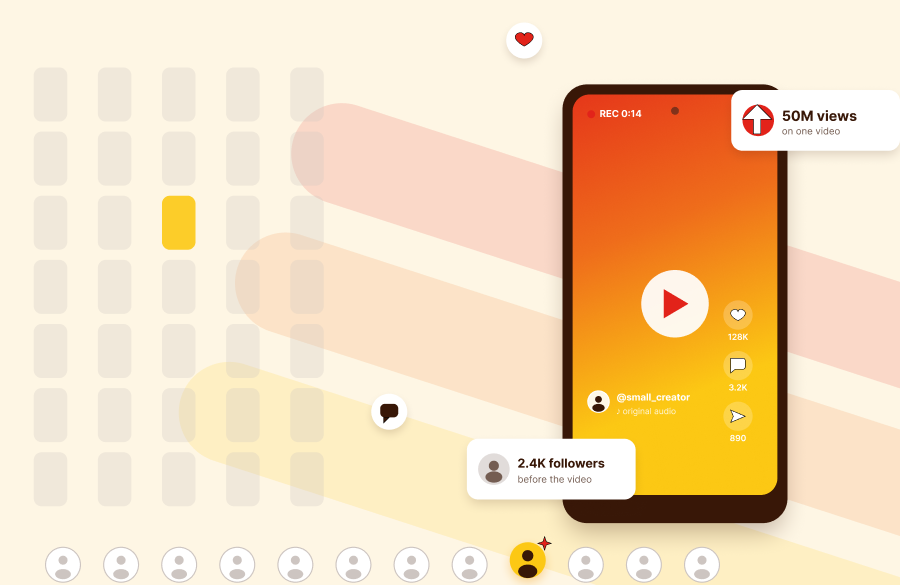
Kalshi and Polymarket, the two big prediction markets, show where the model is heading. Anderson Lin, who ran Kalshi's UGC for two months, claims the program went from scratch to more than 120 million views. Jay Liang, who also worked on Kalshi's program, shared a result that sums up the economics of the whole channel: he hired three creators with over a million followers each, and they produced a few million views between them, while a small creator he onboarded, Allen Wang, posted a single video that hit 50 million. Follower count did not predict the outcome; the video did. Kalshi also runs formal creator briefs with brand guardrails and approved hook formats drawn from its advertising rules, including a dedicated brief for its World Cup markets this summer, because a regulated trading product cannot let dozens of creators improvise claims. Polymarket made the clearest statement of all in January: it hired Tobin Tang away from Wispr Flow to lead UGC full time, and Tang dropped out of the University of Waterloo to take the job. Running a UGC program is now a role that companies compete to fill.
Cal AI, the calorie-tracking app built by teenagers Zach Yadegari and Blake Anderson, shows the model working all the way through to revenue: more than 250 fitness and nutrition creators on monthly retainers, producing videos that read as their own content rather than as ads. Yadegari has said publicly that this creator network alone carried the app to about US$2Mn in monthly revenue, with paid ads layered on only after organic growth flattened. The company reported roughly US$30Mn in 2025 revenue before MyFitnessPal acquired it.
The pattern runs wider than these five companies. Blake Anderson's earlier apps RizzGPT and Umax grew the same way, and Anderson has said influencers were his most profitable channel.
This is now a recognized growth discipline, not a lucky streak.
Factors to consider before starting one
First, the views-versus-conversion gap that Min identified is real and is the single biggest reason UGC programs waste money.
Second, creator selection compounds, so the first few hires matter more than any later batch. Third, installs and paid conversions matter more than impressions, and attribution tends to be messy since most users go straight to the app store rather than clicking a link.
Finally, UGC is not for everyone. If buyers actively search for a solution rather than discovering it in a feed, search marketing may beat creators outright.
How Bangladeshi startups can leverage this
Most of this playbook works in Bangladesh as it is, and very few local brands use any of it. Take the replication loop. If thirty creators are posting and one video does much better than the rest, that script gets copied and sent to the other twenty-nine. That takes an afternoon. Most local brands do the opposite: they pay an influencer for one post, settle the invoice, and move on. The hook library works here too. Give creators five specific things to show about the product, written in Bangla, the way Wispr gave creators the Tchaikovsky idea. A brand guidelines PDF is the wrong tool here, because that produces thirty versions of the same testimonial.
Two things need to change for Bangladesh.
First, the platform. The U.S. programs run on TikTok and build new pages from zero, letting the algorithm find viewers. Bangladesh runs on Facebook, and the Facebook feed is mostly people its users already know. So the best creator to hire here is different: people with two to four thousand followers, where those followers are their classmates, colleagues, and relatives, hired thirty to fifty at once. When they post about a product, it does not feel like an ad. It feels like someone they know is using something. Moonskin, an organic beauty brand in Dhaka, already grows this way, with normal people on camera instead of polished shoots. StuDays, the student discount app, fits this model well too. A student filming a discount at a cafe is just showing their day.
Second, the calendar. Every brand here already plans around the two Eids and other calendar events like New Year's Eve and Mother's Day. And that is exactly the problem. During those weeks the feed floods with festive brand content, and most of it looks the same. So UGC in Bangladesh has to do two things. During the big months, occasion content is the wrong move. Instead, a small, relatable activity people are already doing in that season, with the product sitting inside it naturally, works better. In one recent Dhaka campaign, for Fresh Cola, a video under ten seconds, built around one ordinary moment everyone recognizes, crossed 3.5 million views. People did not share it because of the brand. They shared it because it was them.
Just as important, during the quiet months when nothing is happening and most brands go silent, posting should continue. Most brands go silent between occasions, which makes ordinary months the cheapest time for a startup to become a familiar face in the feed. Recurring UGC in the pipeline every month acts as a brand's content production and distribution engine.
The order matters. Hire many small, trusted creators first. Post steadily for months until people recognize the brand in their feed. Then build the conversion side. Attention is cheaper in Bangladesh when UGC and distribution are used properly.



.png)




.jpg)





.jpg)

.png)















.jpg)
.jpg)


.jpeg)


.jpg)


.jpg)


.jpg)
.jpg)

.jpg)
.jpg)