.png)
Bangladesh Launches US$33Mn Fund of Funds for Startups
Startup Bangladesh has launched a US$33Mn Fund of Funds to channel public capital through professional venture fund managers. Here's what it means for founders, fund managers, and investors.
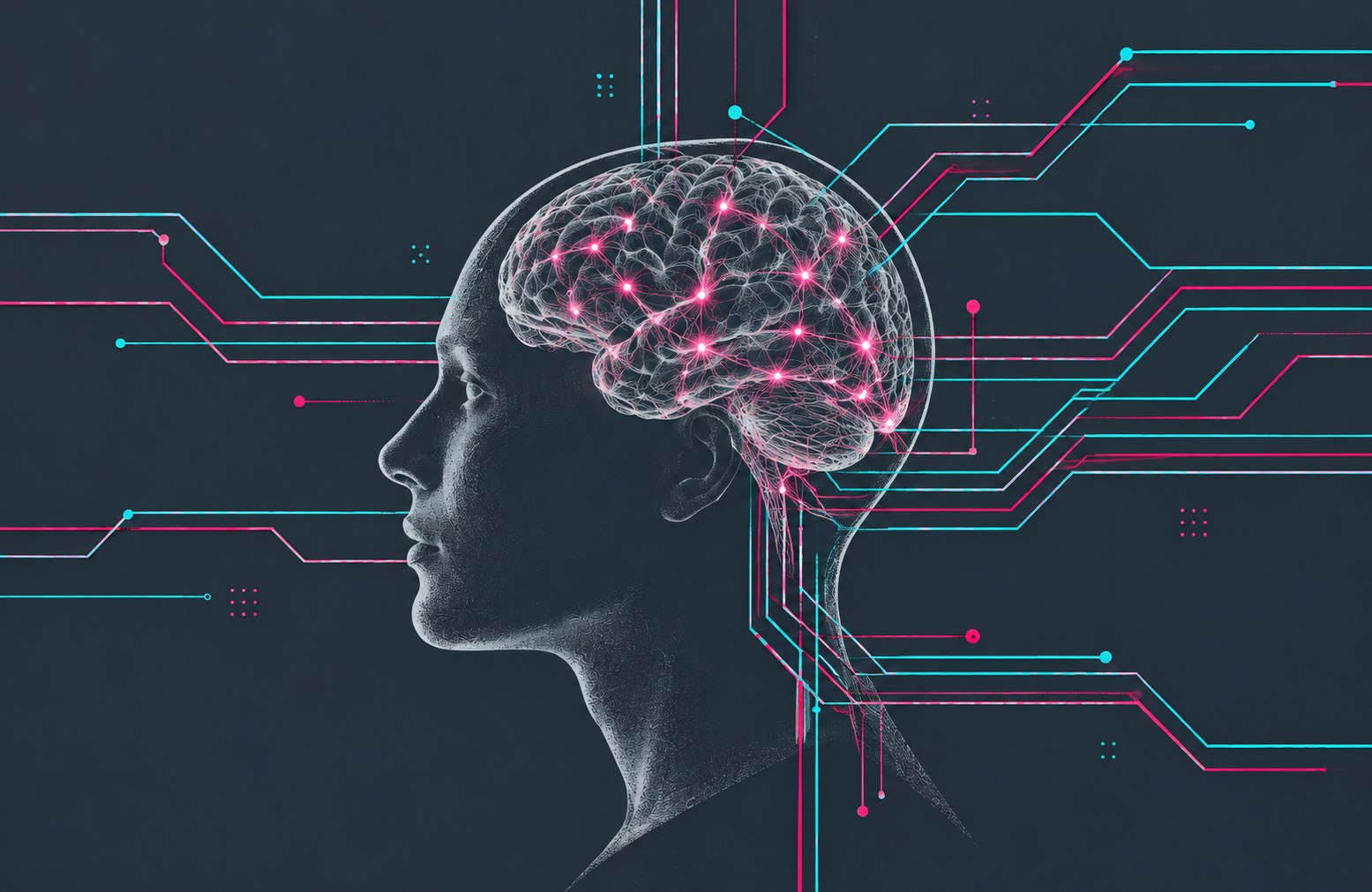


A startup co-founded by Bangladeshi engineer and University of California, Berkeley professor Sayeef Salahuddin has been acquired by Apple, bringing a technology designed to detect magnetic signals from the human body into the company's health and wearable technology business.
Sonera Magnetics, a California-based deep-tech company founded in 2018, developed compact magnetic sensors designed to detect signals generated by the brain, nerves, and muscles. The company's technology was intended to reduce the size and complexity of systems traditionally used to measure these signals.
Apple completed the acquisition in May 2026, according to European Union acquisition records. Neither Apple nor Sonera publicly announced the transaction. A European Commission disclosure said Apple would acquire certain assets from Sonera and offer employment to some of its employees. Financial terms of the deal were not disclosed.
Salahuddin is one of Sonera's three founders, alongside Dominic Labanowski and Nishita Deka. His involvement gives the deal a Bangladesh connection: he studied Electrical and Electronic Engineering at Bangladesh University of Engineering and Technology before moving to the U.S. for graduate research and later joining Berkeley.
Salahuddin completed his B.Sc. in Electrical and Electronic Engineering at BUET in 2003 and earned a Ph.D. in Electrical and Computer Engineering from Purdue University in 2007.
He joined UC Berkeley's Department of Electrical Engineering and Computer Sciences in 2008. He is now the TSMC Distinguished Professor of Electrical Engineering and Computer Sciences and a senior materials scientist at Lawrence Berkeley National Laboratory.
Sonera's technology descends from a specific line of that research, not Salahuddin's body of work in general. Labanowski met Deka while the two were electrical engineering PhD students at Berkeley. Labanowski was also Salahuddin's doctoral student, and between 2016 and 2017 the two co-authored a series of papers in Applied Physics Letters on acoustically driven ferromagnetic resonance, or ADFMR — a technique for using surface acoustic waves to drive magnetic resonance in a thin film. Labanowski's 2019 Berkeley doctoral thesis, advised by Salahuddin, carried the same name. The two are listed as co-inventors on a University of California patent covering a magnetic field sensor built on the technique, which became the basis for what Labanowski and Deka later commercialized as Sonera.
Sonera's technology relies on a basic property of human physiology: electrical activity in the body produces magnetic fields.
When neurons fire or muscles contract, electrical currents are generated. Those currents produce magnetic signals that can be detected outside the body. Conventional technologies such as electroencephalography (EEG) and electromyography (EMG) measure electrical activity directly. Sonera focused instead on measuring the associated magnetic fields.
The difficulty is that those fields are extremely weak. Conventional systems for detecting biomagnetic activity can require substantial equipment and controlled environments. Magnetoencephalography, or MEG, for example, typically relies on sensitive magnetic sensors, shielding, and cooling systems to detect signals produced by the brain.
Sonera developed magnetometers designed to operate at room temperature and in smaller form factors, building on the ADFMR technique from Salahuddin and Labanowski's earlier academic work: driving a magnetostrictive film into resonance using surface acoustic waves on a piezoelectric substrate, then reading the change in that resonance to detect a weak external magnetic field. The objective was to make biomagnetic measurements possible with sensors that could eventually be incorporated into portable devices rather than confined to specialized facilities.
Sonera's first publicly disclosed product was the S1 chip, which was designed to detect magnetic signals generated by muscles.
The company said the sensor could measure muscle activity without electrodes making direct contact with the skin. It identified applications including prosthetic control, neuromuscular monitoring, disease biomarkers, and sports performance.
Sonera also explored consumer applications. Its research included the use of magnetic muscle signals for gesture recognition, facial muscle sensing, and sub-vocal speech detection, with potential integration into devices such as smartwatches, smart glasses, and earbuds.
The same underlying approach could be applied to signals from the nervous system. Sonera also worked on sensors for neurological imaging, including research aimed at reducing the size, cost, and power requirements of systems used to detect magnetic signals from the brain.
In 2023, Sonera emerged from stealth with a US$11Mn Seed round led by Amplify Partners. The company said the funding brought its total capital raised to US$20Mn.
At the time, Sonera described applications spanning healthcare, personal computing, smart apparel, and neurotherapeutics.
Apple's acquisition comes as the company is expanding the health capabilities of the Apple Watch.
At its September 2026 product event, Apple introduced the Apple Watch Series 12 with a new Health Sensing System, higher-frequency heart-rate and heart-rate variability measurements, and a redesigned Health app.
The company is also moving further into a market occupied by specialized health and fitness devices. WHOOP has built its product around continuous measurements of sleep, strain, recovery, and other physiological metrics. Fitbit, owned by Google, has similarly focused on activity, sleep, heart-rate, and health tracking.
Apple's new Readiness feature uses recent activity, sleep, and physiological data to assess a user's capacity for the day, bringing the Apple Watch further into the type of personalized health analysis offered by dedicated fitness trackers.
Sonera's technology, however, operates at a different level. Its sensors are designed to capture magnetic signals generated by muscles, nerves, and the brain, giving a device access to biological signals that conventional wearable sensors do not measure in the same way. That could give Apple another source of physiological data as it develops its health and wearable products. There is no public indication that Apple has decided how to use Sonera's technology.
The European acquisition disclosure confirms the transfer of certain Sonera assets and employment offers to some of its staff. Apple has not announced a product or feature based on the company's technology.
Sonera spent years moving its technology from university research into commercial development. Its founders filed patents around the sensing technology, secured government-backed research funding, raised venture capital, and developed the S1 chip for muscle sensing.
Salahuddin's role spans the academic and commercial sides of that process. Berkeley identifies him as a founder of Sonera, and patent records list him and Labanowski as co-inventors on the University of California's ADFMR magnetic field sensor patent — the same patent family that traces back to their 2016–2017 papers and Labanowski's Berkeley doctoral thesis, work that predates Sonera's founding by two years and now sits inside the technology Apple has acquired.
What happens to the technology next is unclear. Apple has not said whether Sonera's sensors will be used in the Apple Watch or another product, or whether the acquired technology will remain part of longer-term research and development.
For now, the deal gives Apple access to a sensing technology designed to detect magnetic signals from muscles, nerves, and the brain, at a time when the company is adding more health measurements and personalized analysis to its wearable devices.
Sources



.jpg)




.jpg)

.png)



















.jpg)
.jpg)


.jpeg)


.jpg)


.jpg)


.jpg)
.jpg)

.jpg)
.jpg)